

2026 Valentines Day AndaSeat Novis Kaiser 3E

2026 Valentines Day AndaSeat Novis Kaiser 3E Chair
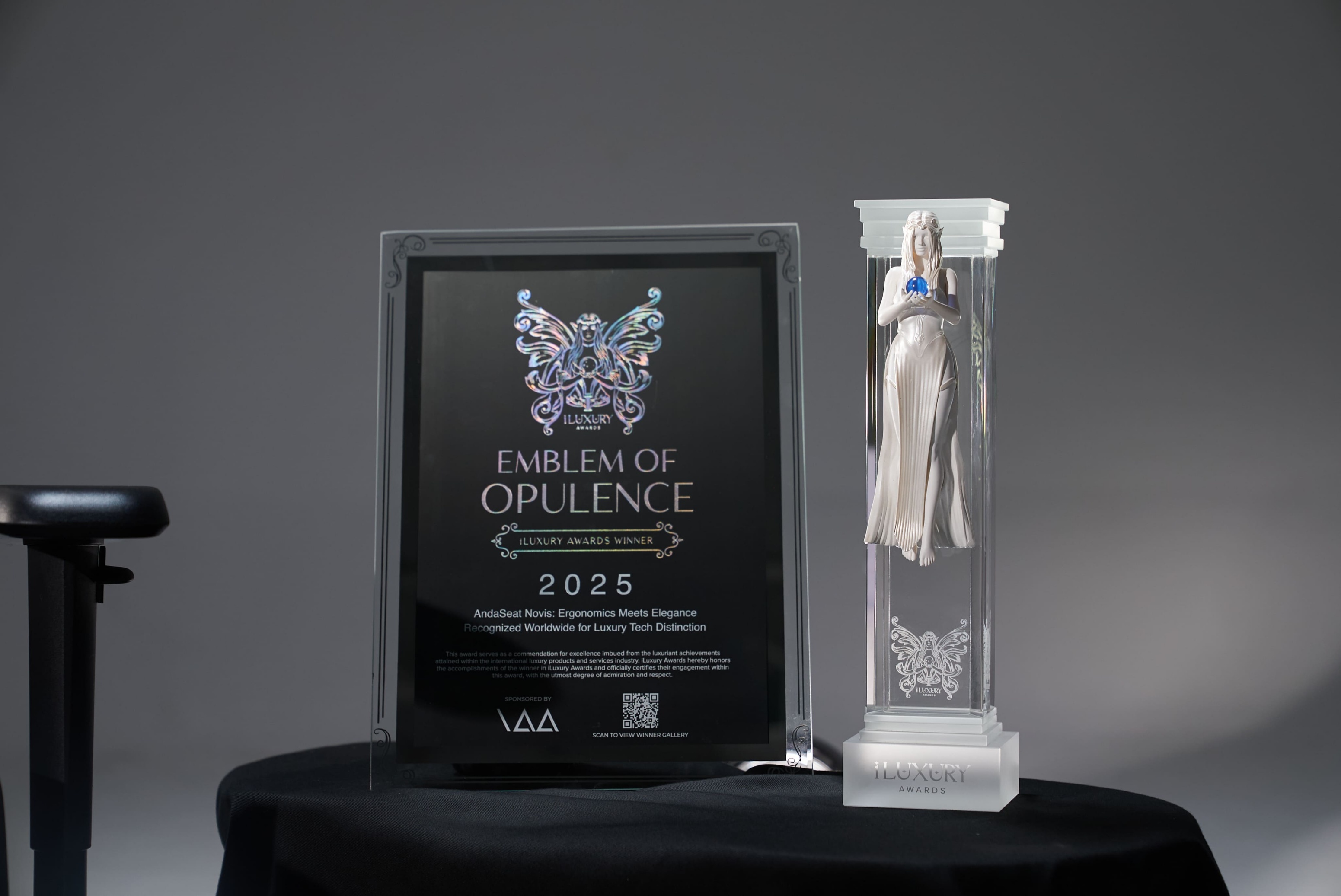
Novis AndaSeat iLuxury Award 2025

Novis Series
AndaSeat Novis Enters Seating Discussions as Compact Workspaces Reshape Ergonomic Expectations
SPOKANE, WA, UNITED STATES, February 1, 2026 /EINPresswire.com/ -- As remote work and hybrid study environments continue to define daily routines, the relationship between seating size, visual focus, and postural stability is receiving increased attention. While
ergonomic discussions have traditionally centered on lumbar support and cushioning, recent research suggests that chair scale and visual presence play an underexamined role in long-term comfort, particularly in compact home environments.This shift reflects broader changes in how people work and live. According to aggregated housing and workplace surveys published between 2024 and 2025, more than 52% of remote workers operate from shared or limited-space environments, including bedrooms, dining areas, and multi-purpose rooms. In these settings, oversized seating is increasingly cited as a contributing factor to visual fatigue, posture inconsistency, and reduced workspace efficiency.
Against this backdrop, the AndaSeat Novis Series has entered buyer discussions as an example of how compact ergonomic seating may address emerging challenges associated with modern work-from-home setups.
Compact Workspaces and Changing Ergonomic Priorities
The growth of remote and hybrid work has not been accompanied by a proportional expansion of living space. Urban housing data indicates that a significant portion of younger professionals and students now work within environments measuring less than 8 square meters per functional zone. Within these constraints, furniture scale becomes a critical ergonomic variable rather than a purely aesthetic consideration.
Research examining workstation behavior in compact environments suggests that oversized chairs can disrupt visual balance and spatial orientation. Users often report increased awareness of surrounding furniture, reduced desk visibility, and difficulty maintaining a consistent seated position. Over time, these factors contribute to subtle posture shifts, as users unconsciously adjust their sitting position to accommodate spatial limitations rather than ergonomic needs.
As a result, buyers are increasingly evaluating seating not only on support features, but on how well a chair integrates into limited spaces without overwhelming the user’s visual field or restricting movement.
Visual Load and Its Relationship to Sitting Comfort
Visual fatigue is commonly associated with prolonged screen exposure, but recent ergonomic studies suggest that environmental factors play a complementary role. When large objects dominate a workspace, the visual system must continuously process spatial boundaries, which can contribute to cognitive strain during focused tasks.
Several workplace ergonomics reports published in 2025 note that nearly 47% of respondents working in small home offices experience difficulty maintaining visual focus when furniture scale feels disproportionate to the room. This effect is amplified when seating extends beyond the desk footprint or restricts peripheral movement.
In seating evaluations, this has led to a growing appreciation for chairs that maintain ergonomic intent while minimizing visual and spatial intrusion. Compact designs that align closely with desk dimensions are increasingly associated with improved concentration and posture consistency.
Postural Consistency in Small Environments
Beyond visual factors, posture stability is also affected by chair scale. In compact spaces, users often shift their seating position to avoid contact with surrounding furniture or walls. These adjustments, while subtle, can accumulate throughout the day and contribute to uneven spinal loading.
Observational studies of seated behavior in constrained environments indicate that users seated in oversized chairs are more likely to lean forward or rotate asymmetrically, particularly during tasks requiring frequent reach or screen interaction. Over time, these habits may undermine otherwise well-designed lumbar or backrest support.
This insight has shifted attention toward seating that supports neutral posture without encouraging compensatory movement. Chairs that offer balanced support within a reduced footprint are increasingly viewed as suitable for environments where space limitations are unavoidable.
The Role of Minimalist Ergonomic Design
Minimalist seating design has gained relevance not as a stylistic trend, but as a functional response to spatial and ergonomic challenges. By reducing excess bulk and visual complexity, minimalist chairs aim to support focus and posture without drawing attention away from the task environment.
The Novis Series reflects this approach through a streamlined structure that prioritizes core ergonomic contact points while maintaining a compact profile. Rather than relying on large external components, the chair integrates support into a form designed to align closely with standard desk setups.
This design philosophy resonates with users seeking a gaming chair for office use or study environments where visual simplicity and spatial efficiency are valued alongside comfort.
Ergonomics Without Visual Overload
One of the recurring themes in buyer discussions is the desire for ergonomic support without the visual dominance often associated with gaming chairs. Surveys focused on home office aesthetics suggest that over 50% of respondents prefer seating that blends into their environment rather than signaling a single-purpose function.
In response, chairs like the Novis are evaluated for their ability to provide posture support while remaining visually neutral. This balance is particularly important in shared or multi-use rooms, where seating must coexist with other furniture and activities.
By maintaining a reduced silhouette and restrained design language, the Novis Series is frequently referenced as an option for users prioritizing visual calm and ergonomic consistency.
Seasonal Reassessment and Everyday Comfort
Seasonal moments such as Valentine’s Day often act as informal checkpoints for evaluating daily comfort and living arrangements. Rather than driving impulse purchases, these periods prompt users to reassess items tied to long-term use, including seating.
Consumer behavior summaries indicate that during early-year seasonal periods, buyers are more likely to review furniture that influences daily routines rather than decorative items. Seating, particularly in work-from-home environments, becomes part of a broader conversation about physical well-being and spatial balance.
Within this context, the Novis Series appears in discussions not as a novelty item, but as a response to ongoing challenges related to compact workspaces and sustained sitting.
Accessibility and Entry-Level Ergonomic Considerations
Another factor shaping Novis-related discussions is accessibility. As more users seek ergonomic seating for the first time, entry-level models with simplified designs are often preferred. Complexity in adjustment or oversized construction can deter users unfamiliar with ergonomic concepts.
The Novis Series emphasizes ease of integration rather than extensive customization. This approach aligns with feedback indicating that first-time ergonomic chair users value intuitive support and straightforward setup over highly adjustable systems that may go unused.
In compact environments, this simplicity also reduces the cognitive and physical effort required to maintain a comfortable seated position.
Broader Implications for Home Office Seating
The attention surrounding compact ergonomic seating reflects broader changes in how workspaces are defined. As remote work remains a fixture for many, expectations for seating are likely to continue evolving toward solutions that balance comfort, spatial efficiency, and visual harmony.
Industry observers anticipate increased demand for chairs that function across work, study, and leisure without dominating limited environments. In this landscape, compact ergonomic designs are positioned to play a central role in shaping future seating preferences.
The Novis Series illustrates how ergonomic principles can be applied within constrained dimensions, addressing both physical and environmental aspects of comfort.

No comments:
Post a Comment