


Low Vision Awareness Month Shines a Light on Options Many Patients and Doctors Don't Know About
SEATTLE, WA, UNITED STATES, February 24, 2026 /EINPresswire.com/ -- February is Low Vision Awareness Month, and Seattle Low Vision wants people across the Pacific Northwest to know that a diagnosis of low vision does not mean giving up the activities
that matter most. For Angela Barry of Medford, Oregon, and Roger L. of Redmond, Washington, specialized low vision glasses prescribed by Seattle low vision optometrist Dr. Ross Cusic opened doors they didn't know were there.What Is Low Vision?
Low vision describes significant visual impairment that cannot be fully corrected with standard glasses, contact lenses, medication, or surgery. It affects millions of Americans and can result from conditions such as macular degeneration, diabetic retinopathy, glaucoma, retinitis pigmentosa, ocular melanoma, and other eye conditions. People living with low vision often struggle with reading, recognizing faces, grocery shopping, using a computer, and driving.
One of the biggest challenges isn't the vision loss itself—it's that many people simply don't know that help exists. They see their eye doctors regularly, receive accurate diagnoses, and undergo appropriate medical treatment. But when it comes to functional solutions for daily living, the conversation often stops there.
Angela Barry knows this frustration firsthand.
Angela's Story: "Nobody Ever Said I Could Get Help"
Angela, a 55-year-old counselor from Medford, Oregon, lost the sight in one eye due to radiation treatment for ocular melanoma. Her remaining eye developed a vitelliform lesion—a genetic condition that causes pigment buildup under the retina, creating central vision blurriness similar to macular degeneration.
Over the course of a year, Angela's vision declined to the point where she could no longer read labels at the grocery store, see the card reader at checkout, identify her seat on an airplane, or read a paper book. As a knitter, a counselor who works on a computer, and a caretaker for her father, the losses were mounting.
"I see a lot of doctors and they take a lot of pictures of my eyes," Angela said. "And it's very difficult to get someone interested in your eyesight."
After one particularly discouraging appointment where she was told that everyone's eyesight gets worse as they age, Angela came home and cried. Then she got online and started searching.
"I came home and I cried a little bit, and then I got on the internet and started going, what is out there?"
Her search led her to the International Academy of Low Vision Specialists, where she found Dr. Ross Cusic at Seattle Low Vision. There was no low vision specialist listed in Oregon, but Angela's daughter was living in Seattle at the time. She decided to make the trip.
A Different Kind of Eye Appointment
When Angela first called Seattle Low Vision, she wasn't sure she even belonged there.
"I called and talked to somebody in the front office and I said, I don't even know if this is right for me. I haven't been referred or anything," she recalled. Dr. Cusic called her back personally for a free phone consultation.
"I was so grateful when I talked to him. I just could have cried because I felt like I'd been trying to have this conversation with people," Angela said.
What struck Angela most was that Dr. Cusic actually listened- and then asked a question no other doctor had: “What are your goals? What do you want to be able to do?”
"Nobody had asked me about that before," Angela said. "And so I just found that way of thinking about it to be helpful and kind of validating. There's a lot of things that I want or need to do that have gotten a lot harder."
What Dr. Cusic Does
Dr. Ross Cusic is a low vision optometrist in Seattle who specializes in prescribing custom low vision glasses and specialty optics for people whose vision cannot be fully corrected with standard eyewear. His evaluations are hands-on and goal-driven—focused not on what patients can't see, but on what they want to do.
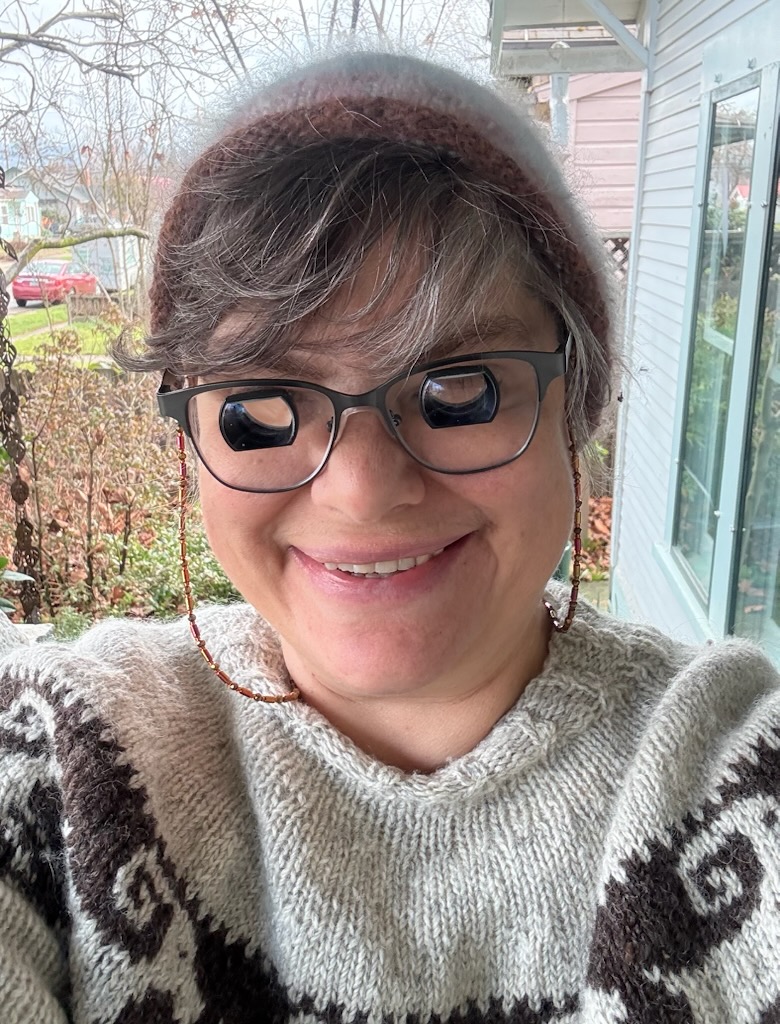
For Angela, Dr. Cusic prescribed two pairs of specialty glasses: one for close-up tasks like knitting and reading, and one with bioptic telescope lenses for distance tasks like reading road signs, recognizing faces, and navigating safely while driving and walking. He also recommended computer software to support her counseling work and discussed home lighting strategies.
"We're out there standing in the parking lot with the lenses," Angela laughed, "and he's going, 'What can you see?' And I'm like, okay, now I'm having a good time."
Angela described Dr. Cusic as someone who genuinely listens, validates concerns, and brings real enthusiasm to helping patients see better. "I just found that he listened actually to what my issue was. And so that was the first thing that was very helpful."
What Are Bioptic Telescopes?
A bioptic telescope is a small telescopic lens mounted in a pair of glasses. The wearer looks through regular prescription lenses most of the time and tilts slightly to look through the telescope for distance tasks—like reading street signs, identifying faces, or checking traffic. For Angela, these glasses made navigating the world safer and more confident.
"For the far glasses, it does help me read signs when I'm driving," she said. "There are some things that if I couldn't drive at all, it would change my day-to-day life pretty significantly."
Bioptic telescope glasses have been in use for decades. Optometrist Dr. William Feinbloom began developing high-powered telescopic lenses in 1932, and today they remain one of the most effective tools for helping people with low vision maintain independence—including legal driving in many U.S. states, including Washington and Oregon.
Roger's Story: Driving Again in Washington
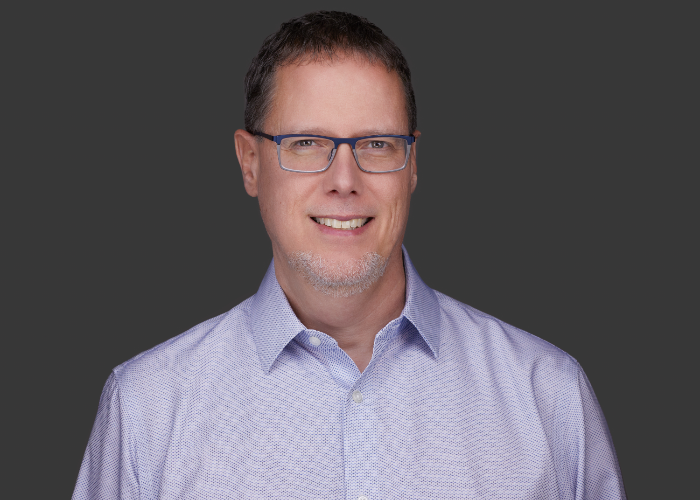
Roger L. of Redmond, Washington, found Dr. Cusic through an internet search with one clear goal: getting glasses that would allow him to drive again.
"The whole process was very smooth," Roger said. "It is definitely worth getting a consultation to determine what is possible, and Dr. Cusic was very good."
Roger received bioptic telescope glasses and was required to complete a driving test wearing the telescopic lenses, along with paperwork completed by Dr. Cusic. He was able to return to driving locally and for short distances.
"I passed the driving test with a high score," Roger said. "And I originally drove only locally and for short distances."
Roger's story is also an honest reminder that low vision care is individualized. After some time, Roger made the personal decision to stop driving due to depth perception challenges. His experience reflects the careful, case-by-case nature of low vision driving evaluation—and the importance of patients understanding both their abilities and their limitations.
Why Don't More People Know?
One of the most striking themes in both Angela's and Roger's stories is that neither was told about low vision care by any of their existing eye doctors.
"I have an ocular oncologist and a retinal doctor and an ophthalmologist," Angela said. "Nobody is ever like, 'Oh, you could get some help with your vision.' Nobody ever says that."
This is not about pointing fingers. Medical eye doctors focus on diagnosis and treatment of disease—and many do excellent, life-preserving work. But there is a gap in the system. When medical treatment has done all it can and patients are still struggling with daily tasks, they often don't know where to turn next. Low vision optometrists like Dr. Cusic bridge that gap with functional, goal-driven care.
"I don't think people know," Angela said. "I feel like if anybody would've heard, it should have been me. I go to an eye doctor five times a year or more."
The Impact of Knowing Your Options
For Angela, the glasses have brought back independence she feared was slipping away.
"It's just like you're fully functional. You're independent in the way that you're used to being independent," she said. "If you start to look around and go, there's all these things I can't do without help, and help isn't always readily available—there's not always somebody standing there going, let me help you."
She also emphasized that low vision doesn't just affect seniors. At 55, Angela is still working, caregiving, and living an active life.
"I just feel like a lot of people have to be in the situation I'm in where they're kind of in the middle of their life, or maybe they're older and they're still doing a lot of things."
A Message for Those Considering a Call
Angela's advice to anyone wondering whether low vision care could help:
"Definitely call and talk to somebody, because you don't know what tools are available to you. To consult with somebody who knows—it could be a huge change."
Roger agreed: "It is definitely worth getting a consultation to determine what is possible."
Low Vision Awareness Month
February is Low Vision Awareness Month—a time to educate the public about what low vision is, how it affects daily life, and what options exist. At Seattle Low Vision, Dr. Cusic helps patients across Washington, Oregon, and the Pacific Northwest understand their choices and take steps toward greater independence.
If you or someone you love is living with low vision, a free phone consultation can help determine whether an evaluation may be appropriate. There is no pressure and no obligation—just honest answers and guidance.
Serving Seattle, the greater Puget Sound region, and the Pacific Northwest.

No comments:
Post a Comment