
Gaming Sofa
Gaming Sofa Series

Gaming Sofa Series
AndaSeat Gaming Sofa Signals a Shift From Performance-Only Seating Toward Everyday Entertainment Furniture
SPOKANE, WA, UNITED STATES, October 15, 2026 /EINPresswire.com/ -- AndaSeat is expanding its approach to gaming furniture with the AndaSeat Gaming Sofa, a relaxed seating concept designed for
gaming, entertainment and everyday home use as video games become increasingly embedded in shared household life rather than confined to dedicated gaming rooms.The change is visible in the demographics and social behavior surrounding gaming. The Entertainment Software Association’s 2026 industry research found that 67% of Americans between ages 5 and 90 play video games for at least one hour per week, representing more than 212 million people. The average U.S. player is now 37 years old, while gaming participation extends across children, Millennials, Gen X and older adults. Parents are also increasingly part of that activity: 75% of parents play video games, and among those who do, 81% have played with their children and 52% play with them weekly.
Those figures describe gaming as a broader household activity rather than evidence that every player is moving a console into the living room. They do, however, challenge a longstanding furniture assumption: gaming seating no longer needs to serve only a solitary user positioned upright at a desk. As gaming overlaps more often with relaxation, family time and other forms of home entertainment, the space around play is beginning to demand a different kind of furniture.
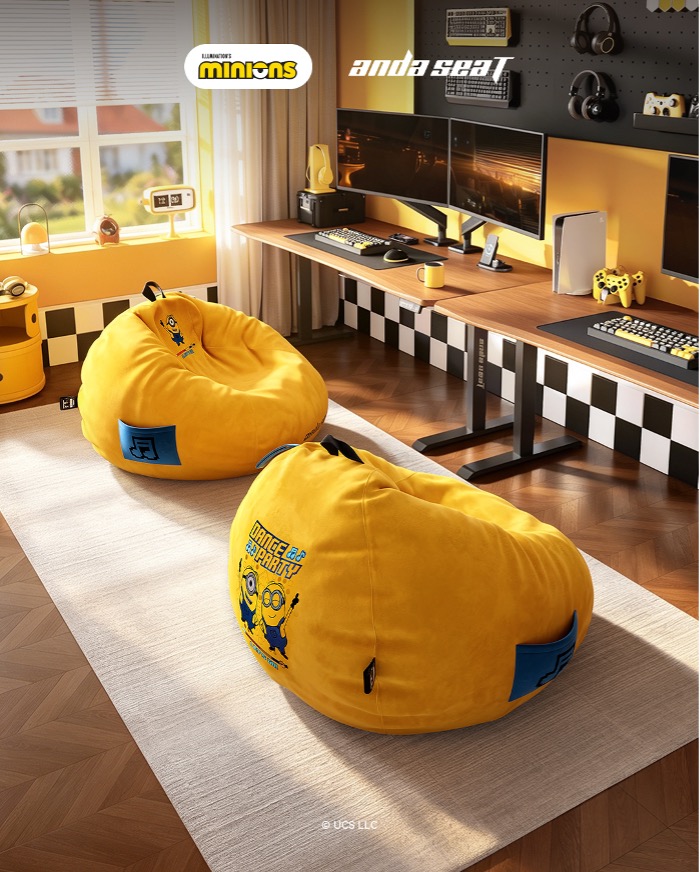
AndaSeat developed its Gaming Sofa around that shift, moving away from the visual and structural language of conventional racing-style gaming chairs toward a lower, softer and more relaxed form intended to coexist with everyday living environments.
Gaming Furniture Is Moving Beyond the Desk
Gaming furniture has traditionally been built around a clearly defined posture and location. A user sits at a desk, faces a monitor, places both arms around keyboard, mouse or controller input, and relies on an upright chair structure for extended sessions. That model remains relevant for competitive PC gaming and work-oriented setups, but it does not describe every way people now play.
ESA’s 2026 data shows that relaxation and fun are the two most common reasons adults give for playing video games, while nearly half of players say games help them stay connected with friends and family. Among parents who game with their children, more than half describe gaming as an opportunity to socialize or spend time together. Gaming therefore increasingly overlaps with behaviors traditionally associated with the living room: unwinding, talking, watching, sharing and spending informal time together.
The design question behind the AndaSeat Gaming Sofa started from that broader context. Instead of treating gaming furniture solely as performance equipment, the product was conceived as seating that could remain relevant before, during and after gaming. Its proportions, cushioning and integrated storage are intended to support a more informal relationship with the screen and with other people in the room.
Low-Gravity Seating Changes the Relationship With the Screen
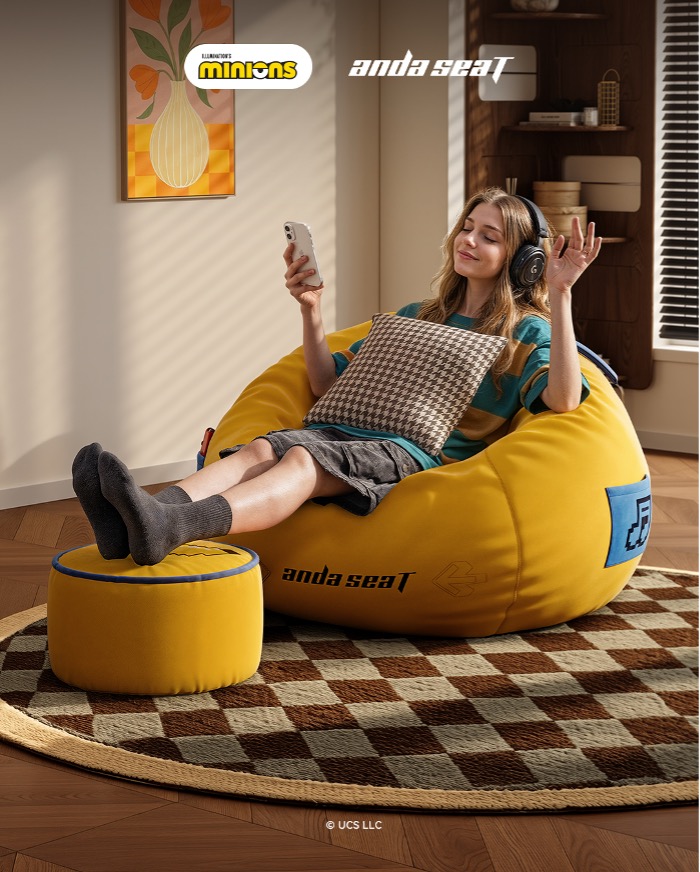
The central design concept is a lower-gravity seating position that places the user closer to the relaxed posture associated with sofas and lounge furniture than with conventional upright gaming chairs.
That difference changes how the product relates to entertainment. Console gaming, handheld play, streaming video and casual co-op sessions often involve different body positions from keyboard-and-mouse work. Users may sit farther from the display, bring a controller toward the lap, shift sideways, cross their legs or settle back during less demanding periods of play. A lower seating platform allows these behaviors without requiring the furniture to maintain the visual language of an office chair.
AndaSeat describes the concept as “Low Gravity, High Energy,” but the design objective is not to claim that a lower seat is universally more ergonomic. It is to offer a different seating category for activities where relaxed positioning is part of the experience. The Gaming Sofa is therefore intended to complement, rather than replace, upright task seating used for desk-based work or competitive gaming.
This distinction is central to its lifestyle positioning. The product is designed for the point at which gaming begins to overlap with entertainment furniture instead of remaining a specialized workstation accessory.
Balanced Support Keeps Relaxed Seating From Becoming Structureless
A softer visual language does not mean removing internal support. AndaSeat uses high-density foam through the Gaming Sofa to create what the company describes as balanced support: enough cushioning to establish a relaxed seating feel while retaining sufficient resistance for repeated everyday use.
That balance matters because lounge furniture and performance seating traditionally solve different design problems. A deeply soft sofa can encourage relaxation but may provide little structure during longer interactive activities. A rigid gaming seat can provide defined support but may feel visually or physically out of place when used primarily for entertainment and social time.
The Gaming Sofa is positioned between those two extremes. Its foam structure is intended to provide a consistent underlying platform while allowing users to settle into less formal positions. Instead of using multiple mechanical adjustment systems, the design relies more heavily on shape, cushioning and seating geometry to establish its character.
That approach also differentiates the sofa from AndaSeat’s chair portfolio. Responsive lumbar mechanisms, multidirectional armrests and task-oriented height controls remain appropriate for desk seating; the Gaming Sofa translates the brand’s interest in support into a product where simplicity and physical ease take greater priority.
Integrated Storage Reflects How Entertainment Spaces Are Actually Used
The product’s side storage pocket addresses another difference between a dedicated gaming station and a shared entertainment space. Living-room gaming often involves controllers, handheld devices, charging cables, remotes, headphones and personal items that may move between the sofa, coffee table and nearby storage throughout the day.
Rather than treating storage as a separate furniture problem, AndaSeat integrated a side pocket directly into the sofa. The feature provides a defined location for smaller frequently used objects without introducing a rigid console or external accessory that changes the relaxed form of the product.
This is a small feature mechanically, but it illustrates the broader design philosophy behind lifestyle gaming furniture. When gaming furniture enters shared spaces, it has to account for the routines of the room rather than only the moment of active play. A controller may need to be available during a gaming session and disappear from view afterward; a remote or mobile device may be used across several different activities in the same evening.
Integrated storage therefore helps the product participate in the room as everyday furniture rather than remain visually tied to one activity.
Resilient Fabric Supports the Move Toward Everyday Furniture
Surface material becomes more important when gaming furniture is expected to remain part of a living space throughout the day. The AndaSeat Gaming Sofa uses a resilient fabric selected for repeated contact and a softer residential appearance than the synthetic leather commonly associated with racing-style gaming chairs.
The design choice reflects a change in context. A product placed in a dedicated gaming room can prioritize a highly technical or competitive visual identity. Furniture in a living room, entertainment area or multi-use home space needs to coexist with other furnishings and remain appropriate when no one is gaming.
Fabric also supports the sofa’s broader identity as a piece of everyday seating. It reinforces the transition from “gaming equipment that can be sat on” toward “furniture that happens to be designed with gaming behavior in mind.”
For AndaSeat, that distinction represents an expansion of its design language rather than a departure from gaming. The company is applying its understanding of seated behavior to a different environment, where visual softness, shared use and relaxed positioning matter alongside support.
From Gaming Setup to Living Environment
The wider gaming market increasingly reflects a social and multigenerational form of entertainment. ESA’s 2026 research found that players commonly see games as a way to relax, have fun and maintain connections, while family gaming is widespread among parents who play. The industry’s cultural reach now extends far beyond the stereotype of a single user in a dedicated gaming room.
Furniture design is beginning to face the consequences of that shift. If gaming takes place alongside conversation, streaming, family entertainment and general relaxation, then the furniture supporting it can no longer be defined only by desk ergonomics or competitive performance.
The AndaSeat Gaming Sofa is the company’s response to that broader environment. Its low-gravity profile changes the posture and visual language of gaming seating, high-density foam provides the underlying support structure, integrated storage accommodates everyday entertainment accessories, and resilient fabric allows the product to function as part of a shared living space.
The larger design idea is straightforward: as gaming becomes more integrated with daily home life, gaming furniture can become less specialized in appearance and more adaptable in purpose.
About AndaSeat
Founded in 2007, AndaSeat develops ergonomic seating and workspace products for gaming, professional and home environments. Its portfolio includes ergonomic chairs, standing desks, monitor arms and lifestyle-oriented seating products. AndaSeat’s product-development approach combines structural design, material engineering and observation of changing user behavior, with a focus on how gaming, work and entertainment increasingly intersect within modern living spaces.

No comments:
Post a Comment